“We cannot expect students to act in ways that are respectful of academic integrity if we don’t explain what it is, why it is so important, and teach in ways that reflect its importance.” - Sefcik et al. (2020)
One of the most effective ways to increase academic integrity may be to explicitly integrate “the core values of academic integrity - courage, honesty, trust, fairness, responsibility, and respect” (Bertram Gallant et al., 2026 p. 27) into teaching and class interactions. Cheating is most likely to occur when students feel unconnected, unprepared and overwhelmed. Instructors can structure courses around student success strategies that mitigate barriers to learning and the temptation to cheat, such as revealing elements of the hidden curriculum, building in flexibility for mental health issues and time constraints, and scaffolding assessments.
Design Academic Integrity into Your Course
As you inculcate academic integrity as a fundamental principle in course design rather than as a set of forced compliances, you may need to create pathways that teach students wise use of their agency as well as the importance of productive struggle and cognitive friction. These pathways are based on learning as a cultural, social, relational, and emotional experience. “Emotionally meaningful experiences enhance learning and should be central to educational design” (Bano and Hou, 2026). Learners tend to retain more in emotionally positive and respectful environments that simultaneously challenge and support students during productive struggle. Therefore, it is crucial that you build a supportive class community to establish an environment of trust, mutual respect, and peer support, thereby encouraging students to participate meaningfully in the learning pathway, not just complete the activities.
To forefront the value of human interactions and community in encouraging academic integrity, instructors might consider the suggested teaching practices below, which implement the TRUST framework (Trust, 2023).
- Transparency
- Real World Applications
- Universal Design for Learning
- Social Knowledge Construction
- Trial and Error
- Prioritize Human Interactions and Class Community
- Build a supportive class community that encourages students to participate meaningfully. Conduct a student survey to get to know their goals, interests, and backgrounds. Use students' existing strengths, cultural backgrounds, and lived experiences to make process-based learning activities that are aligned with your course outcomes.
- Use active learning strategies to give students social support, timely feedback, and opportunities to practice inquiry and planning in a low-stakes manner. Explicitly discuss the importance of productive struggle. Consider using a "flipped classroom" model to free up time for these valuable in-person human interactions.
- Facilitate discussions with students about AI’s impacts on their learning, peer interactions, career readiness, and ethical decision-making.
- Incorporate social learning through out of class small group work or required participation in campus/community activities in which students can apply concepts to the real world, such as participating in a relevant event, volunteering in the community, interviewing people, or conducting research.
- Have students give feedback on each others’ formative work. Give them prompts that spark metacognition and process-oriented thinking while providing their peers with actionable constructive criticism. For example, What element of their work is unclear? How might they clarify it? What is something that was done well, and why?

- Make Your Expectations Transparent to Students
- Anchor your academic integrity syllabus policy in core values of courage, honesty, trust, fairness, responsibility, and respect rather than solely listing punitive consequences.
- Teach integrity proactively by integrating it into assignments and discussing your rationale for particular policies and academic integrity frequently throughout the term.
- Explicitly discuss acceptable resources for assessments (e.g., notes, peer collaboration, specific AI tools). Provide specific examples of what is, and is not, allowed and why. For example, permit a single page of handwritten notes during timed exams to encourage active studying and reduce the perceived need to cheat.
- Intentionally create learning scaffolds by designing formative activities that help students prepare for an exam and/or workshop their papers/projects (so they don’t stress out as much and you have samples of their work). These should be accompanied by timely feedback (from peers, TAs, instructors) that gets incorporated into the next versions. For example, use old exam questions or prompts during class so students can practice writing responses, followed by immediate feedback from instructors and/or peers.
- Integrate a few project deadlines or milestones into your process-oriented assessments. Then ask: How can I communicate how this assessment builds or tests knowledge and skills via productive struggle? How can I provide ample supportive practice tasks and feedback? Is this assessment relevant and challenging enough to motivate independent effort over time?
- Ask students to sign an ethics pledge or check an integrity box at the start of high-stakes assessments and online submissions.
- Integrate Real World Applications and Universal Design for Learning
- Don’t underestimate your students: Ask students to make their own goals and learning strategies explicit, then challenge them to apply academic content directly to their goals, as well as to broader contexts. Measure their growth toward those goals with metacognitive reflections and mastery-based grading models. Talk to CITRAL about creating equitable assessment options and rubrics for your course.
- Normalize metacognition and trial-and-error so students learn from reflection and mistakes. Consider grading formative assessments on completion and metacognitive reflections about the learning process rather than accuracy.
- Instead of trying to "AI-proof" prompts, design assessments that motivate students to care about their learning and express their own individual voice and agency. Require process-based assignments that allow students some choice in demonstrating their skills and knowledge (e.g. video essay or presentation or website). Talk to CITRAL about creating equitable assessment options and rubrics for your course.
- Provide learning scaffolds: Divide major assignments into manageable stages as formative assessments with deadlines (e.g. outline, draft, peer feedback, reflection). This not only helps students build time-management skills, but it also provides opportunities for feedback, mentoring, and metacognition, and prevents anxiety-induced cheating.
- Integrate metacognitive reflections into assessments, such as: What key decisions did you make? How did your ideas evolve from draft to final? Did you use any people or tools (including GenAI) to get feedback, and how did they shape your thinking?


Teach Like you Live in the Age of AI
Students live with constant access to online information, Artificial Intelligence, and a variety of digital tools and apps. This may require instructors to revisit their course learning outcomes and create new assessments or equitable grading strategies that are aligned with contemporary and future changes to students’ careers. Where appropriate, online resources and apps can be used as tools for challenging students to engage in critical thinking, discernment, and creativity. The following examples may be helpful to inspire instructors in the age of AI.
- Dedicate time to exploring how AI is actively used in your discipline, explicitly and openly discussing risks related to inaccuracies, biases, and ethics. Examine how AI impacts intellectual property, environmental resources, and the risks it poses for learning, career preparedness, and disseminating knowledge.
- Use the UCSB Library Guides to teach information and AI literacy skills, like evaluating sources of information for criticality, rigor, and accuracy, citation protocols, and distinguishing primary from secondary sources.
- Prompt AI tools to generate solutions in class, then lead students in critically vetting the content. Evaluate accuracy, identify subtle errors, and discuss exactly where and why the AI fails. Have students practice this in groups and individually.
- Since AI can be used to speed up problem-solving and research, instructors may need to create more sophisticated experiential learning outcomes and assessments than in the past (e.g. prototyping, competitions, showcase, publications, portfolios, real projects and research opportunities). It may also require changes to grading structures, such as competency-based, mastery-based, or specifications grading.
- Update your assessments to integrate process-based options that allow students to use their digital toolbox, such as creating multimedia, website development, designing interactive learning apps, and analysing media. Use apps and tools that have been vetted by the university for security, student data protection and privacy.
- Find human ways to check students' knowledge and ensure they did their own work. For example, do short oral exams, submit work to a publication, or make a video/audio “think aloud” of them solving a problem, doing peer review, or describing a key decision.
- When AI is permitted, require students to submit details about their tool choice, prompts, and how the tool supported and/or hindered their learning process (e.g., grammar help vs. organizing ideas).

The purpose of written assignments and projects is to see if students can organize their thoughts, analyses, and voice into a cohesive whole that others can easily understand. As you reconsider your course outcomes and assessments in light of AI, determine if your written assignments need to be written as a paper, or if students can demonstrate their thinking in other ways, like infographics, webpages, videos of annotated slideshows, performances, or applied projects.
- Consider using class time for students to plan, write and/or workshop their writing with peers and the instructional team.
- Collect handwritten “baseline” writing every few weeks to act as benchmarks for growth and personal writing style.
- Add brief reflective tasks to assignments in which students describe how their writing and thinking evolved as they completed the assignment (give examples). For example, ask students to provide recorded commentary about things they changed based on the feedback they received.
- For high-stakes written assessments, in-class exams may be most appropriate (e.g. on Canvas with Respondus lockdown browser or using a Blue Book). Have a plan for students with DSP accommodations.
The purpose of problem sets is to give students low-stakes ways to practice complex problem-solving skills in preparation for real-world applications. Since AI can speed up the problem solving process, instructors may need to reconsider how students are practicing and receiving feedback on that practice. To create opportunities for you to check students’ knowledge and skills prior to an assessment, try some of these techniques.
- Ask students to handwrite their work and use Gradescope to grade it efficiently.
- Give students low-stakes quizzes during class in which they handwrite their answers. These can be individual or group quizzes, letting peers grade answers, or gamified quizzes.
- Have students make videos to explain their thinking steps (metacognition), share those with each other in a discussion, and comment on a new technique or answer someone’s question.
- Consider assigning homework that is graded for completion and metacognitive reflection rather than for correct answers.
- Create low-stakes online quizzes with multiple attempts and record students’ highest grade.
- For high-stakes problem-solving assessments, in-class exams may be most appropriate (e.g. on Canvas with Respondus lockdown browser or using a Blue Book). Have a plan for students with DSP accommodations.
Study websites like “Chegg” and “Course Hero” contain worked out solutions to many textbook problems. They reward students for uploading solutions to your old exams and assignments. It is best to assume that students have access to solutions for all of your past assessments, and update them to prevent academic dishonesty. Even small changes like location, names, and numbers can help. You can report unlawful posting of your course materials to the Office of Student Conduct to ask them for help taking down your content, if needed.
English Language Learners
Students will arrive with different levels of English language proficiency and academic competence. Try to use clear, straightforward language for course communications, assignments, and assessments. Encourage students to use the Campus Learning Assistance Services in the Student Resource Building for support and guidance.
Students with Accommodations
Instructors are responsible for accommodating students who have a disability registered with UCSB’s Disabled Students Program (DSP). DSP will send instructors an email notification for each applicable student in their course along with a list of specific accommodations for that student (e.g. extra time on exams).
Cultural Values
Some students come from cultures where value is placed on precise repetition of learned materials. Such students may have a difficult time distinguishing between original work, citation, and plagiarism so be prepared to provide appropriate resources and guidance.
Secure Higher Stakes Assessments
Instructors are responsible for certifying students’ attainment of the learning outcomes. In the age of AI, that means determining which assessments can be done with a variety of external aids, and which need to be secure. Secure assessments mean “we know who is completing the assessment and what aids they’re using.” (Bertram Gallant et al., 2026, p. 27). Some faculty feel that secure onsite testing increases the integrity and validity of assessments. The university's testing center may be utilized for secure testing in some instances.
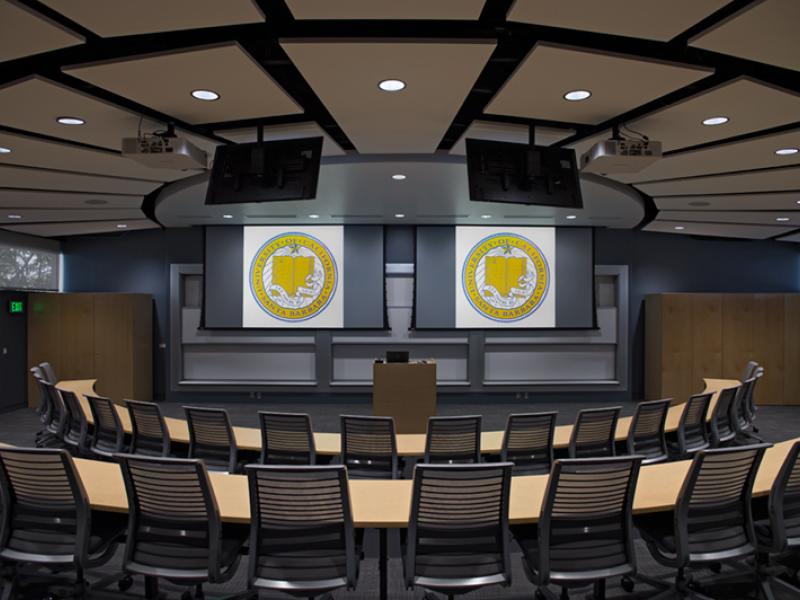
When administering assessments in a classroom, consider the following strategies to create a secure testing environment:
- Create multiple versions of the exam or create online question banks in Canvas and randomize the quiz questions online. If you print your exam, print each version on different color paper to help you sort them for grading and ensure students near each other don't have the same exam.
- When possible, spread students out in the room and/or assign seats.
- Frequently “walk the rows” and place yourself in strategic points in the room that allow you to see what students are doing.
- Make and enforce rules for what students can bring to their desks to take the exam (e.g., pencils/pens and one page of handwritten notes are allowed, but backpacks and devices stay in front of the room).
- Collect and then re-distribute blank blue books: Ask students to bring in a blank blue book which they will turn in to you. Then randomly redistribute the blank blue books to the students for the exam. This prevents students from showing up to an exam with pre-written content.
- If feasible, check IDs to prevent students from asking others to take the exam for them.
- Have students write their exit time when they turn in an exam to provide an overview of relative student exit times, which may help identify or confirm potential instances of cheating/copying.
Other testing options allow instructors to add “friction” to their exams to disincentivise cheating, such as the following.
- Ethical friction includes strategies such as an integrity pledge in which students review expectations for academic honesty at the beginning of the exam, and then sign their name to pledge that they will not use unauthorized resources or devices while taking the assessment.
- Technical friction restricts or documents students’ actions during an assessment. Respondus Lockdown Browser (RLDB) locks the student’s computer so they cannot copy, print, or visit other websites on their device while taking the quiz. RLDB works best for in-person exams, and might make cheating slightly more onerous for online students.
- Time friction reduces the time available to students for utilizing unauthorized resources. Instructors can set a time limit for a Canvas quiz and/or adjust quiz settings so questions are displayed one at a time.
- Audio/Visual friction adds media within an assessment, either as embedded audio or video clips in a test question or if students must record their responses.
Academic Integrity Violations
A lack of consequences for academic dishonesty conveys to students that cheating is acceptable and that it works. Further, it undermines the value and importance of your course, assignments, and learning more generally. It is university policy for instructors to report all academic dishonesty, even if there will be no formal class or university-level penalties. Reporting ensures that all students are evaluated fairly and equitably on assessments, and are held accountable for their learning. It also helps support students’ understanding and awareness of the fundamental values of academic integrity: courage, honesty, trust, fairness, responsibility, and respect. The Office of Student Conduct also keeps an ongoing record of student behavior so that repeated misconduct can be noticed and addressed. While AI detection software exists, UCSB does not support its use. Cases of academic integrity violations are determined by the Office of Student Conduct based on a "preponderance of evidence," which may include a comparison to students’ previous work, an oral discussion of the submitted work, or other indicators of a substantial change in writing style or content that suggests unauthorized assistance.

References and Resources
Bano, S., & Hou, Y. (2026). Emotions and Adult Learning: A Literature Review of Methodological Approaches. Adult Education Quarterly, 76(1), 68–94.
Hasinoff, Amy. (2018) “Do You Trust Your Students?”
Massachusetts Institute of Technology. (2026). Report of MIT’s Ad Hoc Committee on AI Use in Teaching, Learning, and Research Training.
Mundorff, Deborah. (2019) “Ten Course Design Strategies to Minimize Cheating.”
Sefcik, L., Striepe, M., & Yorke, J. (2020). Mapping the landscape of academic integrity education programs: What approaches are effective? Assessment & Evaluation in Higher Education, 45(1), 30–43.
Trust, T. (2023, August 4). Essential Considerations for Addressing the Possibility of AI-Driven Cheating, Part 2 | Faculty Focus. Faculty Focus | Higher Ed Teaching & Learning.
Trust, T. (2024, May 10). Five Tips for Writing Academic Integrity Statements in the Age of AI. Faculty Focus | Higher Ed Teaching & Learning.
University of California San Diego. Academic Integrity.